
Image Gallery:
FG Calls for Greater Investment in Science, Innovation to Transform Africa's Livestock and Agrifood Systems
The Federal Government has called for increased investment in science, innovation and strategic partnerships to unlock Africa's vast livestock potential and build resilient, sustainable agrifood systems capable of enhancing food security, creating employment and driving inclusive economic growth across the continent.
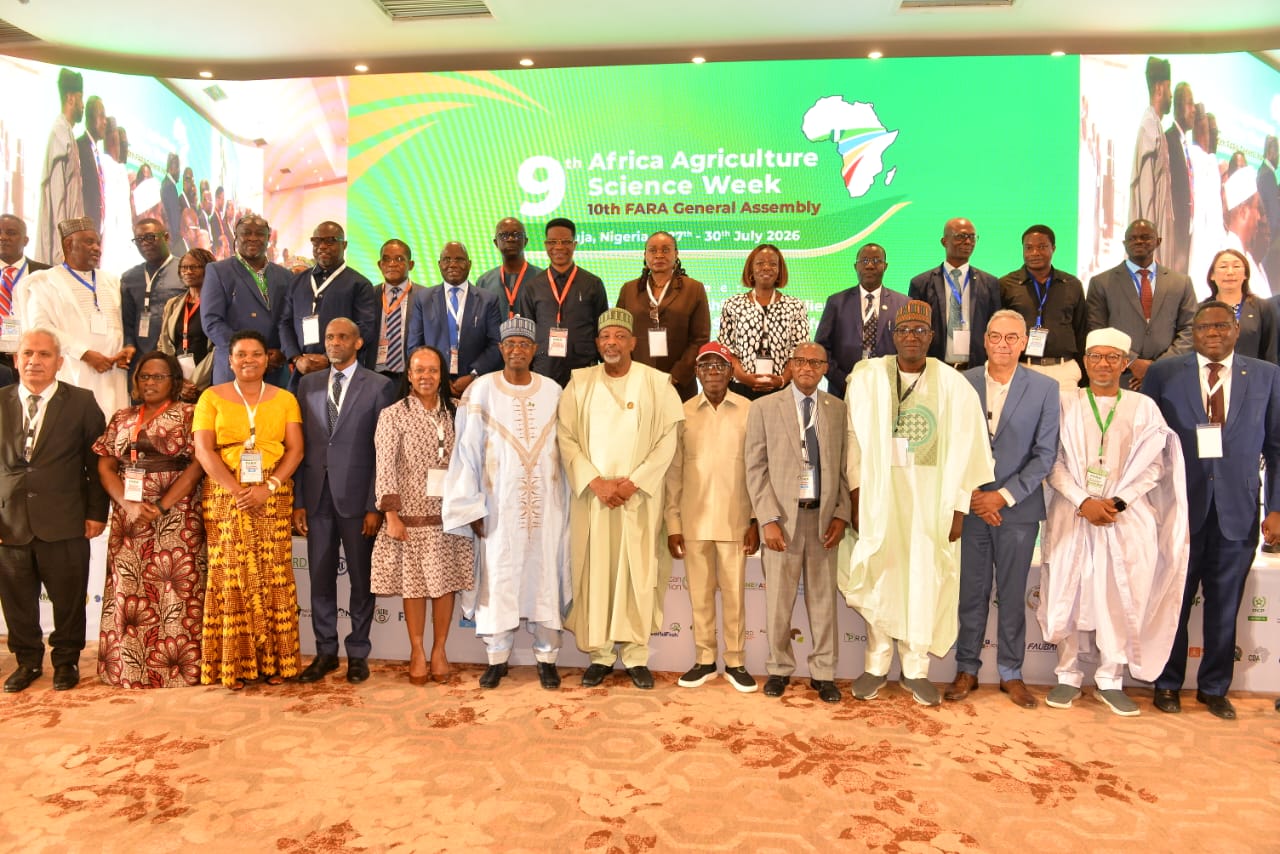
The Honourable Minister of Livestock Development, Alhaji Idi Mukhtar Maiha, made the call at the opening ceremony of the 9th Africa Agriculture Science Week (AASW) and the 10th General Assembly of the Forum for Agricultural Research in Africa (FARA) held in Abuja on Monday, 27 July 2026. The event is themed "Innovations and Partnerships for Resilient and Sustainable Agrifood Systems in Africa."
Welcoming delegates from across Africa and beyond, the Minister described the conference as both timely and strategic, noting that the continent faces unprecedented challenges arising from climate change, rapid population growth and global economic uncertainties. He stressed that science-driven innovation and regional collaboration remain indispensable to securing Africa's food future.
Maiha reaffirmed Nigeria's commitment to the ideals of FARA and the advancement of Agricultural Research for Development (AR4D), emphasizing that research, innovation and cross-border collaboration are fundamental to achieving food security, reducing poverty and accelerating sustainable economic development.
Highlighting the central role of livestock in Africa's agricultural transformation, the Minister stated that resilient agrifood systems cannot be achieved without a vibrant livestock sector that supports nutrition, rural livelihoods and economic empowerment.
He noted that Africa is endowed with enormous livestock resources, including approximately 350 million cattle, 300 million sheep, 400 million goats, 20 million camels and 50 million pigs, representing immense opportunities for investment, value addition and economic transformation.
The Minister acknowledged that Nigeria's livestock sector has long faced challenges such as low productivity, inadequate veterinary infrastructure, climate change and farmer-herder conflicts. However, he said the administration of President Bola Ahmed Tinubu has adopted bold reforms aimed at transforming these challenges into opportunities for sustainable development.
According to him, the establishment of the Federal Ministry of Livestock Development in July 2024 underscores the Federal Government's commitment to repositioning livestock as a key driver of national economic growth.
Maiha explained that the recently launched National Livestock Master Plan (NLMP) and the National Livestock Growth Acceleration Strategy (NL-GAS) provide a comprehensive roadmap for modernising the sector through sustainable production systems, improved infrastructure, stronger value chains, conflict mitigation and enhanced private sector participation.
He disclosed that Nigeria aims to increase the value of its livestock sector from $32 billion to $74 billion over the next decade. To achieve this target, he invited investors, development partners and the scientific community to invest in modern ranching, dairy processing, feed production, cold-chain logistics, veterinary pharmaceuticals, digital livestock identification and traceability systems.
The Minister further challenged researchers and scientists to intensify efforts in developing drought-tolerant fodder, improved breeding technologies, artificial insemination, disease surveillance systems and other climate-smart innovations capable of transforming livestock production across Africa.
Earlier, the Honourable Minister of Agriculture and Food Security, Senator Abubakar Kyari, observed that Africa's future prosperity depends on sustained investment in science, research and innovation.
He noted that every successful agricultural transformation has been built on strong research institutions, deliberate investment and visionary leadership, stressing that Africa must embrace the same approach to achieve lasting food security and economic prosperity.
Kyari reaffirmed that the administration of President Bola Ahmed Tinubu has placed agriculture at the centre of the Renewed Hope Agenda, recognizing that food security is intrinsically linked to national security, economic growth and social stability.
He highlighted ongoing government reforms, including expanded irrigation and all-season farming, agricultural mechanisation, improved access to quality seeds and fertilisers, increased agricultural financing, digital agriculture, agro-industrial development and greater private sector participation.
The Minister also reiterated the Federal Government's commitment to strengthening National Agricultural Research Institutes, universities, extension services and innovation systems through sustained investment and strategic partnerships. He added that emerging technologies such as artificial intelligence, biotechnology, satellite technology and digital agriculture present Africa with a unique opportunity to develop home-grown solutions tailored to the continent's agricultural realities.
In his welcome address, the Executive Director of FARA, Dr. Aggrey Agumya, described Africa Agriculture Science Week as the continent's foremost platform for scientific collaboration, innovation and strategic dialogue on the future of Africa's agrifood systems.
He acknowledged the growing threats posed by climate change, land degradation, biodiversity loss, rapid urbanisation and economic uncertainties but expressed confidence that Africa possesses the natural resources, youthful population and scientific expertise needed to transform its agricultural sector.
Dr. Agumya noted that the continent holds over 60 per cent of the world's arable land, rich biodiversity and a rapidly expanding scientific community capable of driving sustainable agricultural development. He emphasized, however, that scientific discoveries must be translated into practical technologies, enabling policies and innovations that reach farmers and strengthen agricultural value chains.
He therefore called for stronger collaboration among governments, research institutions, universities, development partners, the private sector and farmers to ensure science delivers tangible improvements in productivity and livelihoods across Africa.
Delivering a solidarity message on behalf of the Consultative Group on International Agricultural Research (CGIAR), the organisation commended FARA and the Federal Government of Nigeria for convening the conference, describing it as a critical platform for shaping the future of African agriculture.
The representative reaffirmed CGIAR's commitment to strengthening partnerships with FARA, national agricultural research institutions and governments across Africa to advance scientific research, technological innovation, capacity building and sustainable food systems.
Also speaking, the Director-General of the International Institute of Tropical Agriculture (IITA), Dr. Simeon Ehui, called for stronger collaboration among governments, research institutions, development partners and the private sector to accelerate Africa's agricultural transformation.
He emphasized that, although Africa possesses abundant arable land, a youthful population and growing scientific expertise, sustained investments in research, technology, innovation and strong institutions remain essential to building resilient agrifood systems capable of improving farmers' productivity and livelihoods.
The conference attracted Ministers from across Africa, representatives of the African Union Commission, AUDA-NEPAD, CGIAR Centres, Regional Economic Communities, National Agricultural Research Systems, universities, development partners, private sector organisations, farmers' associations, scientists and other stakeholders committed to advancing resilient and sustainable agrifood systems through science, innovation and partnerships.
The week-long event is expected to produce practical recommendations that will strengthen agricultural research, stimulate investment, promote innovation and accelerate the transformation of Africa's agriculture and livestock sectors for enhanced food security, economic growth and sustainable development.
Henrietta Okokon
Deputy Director, Information and Public Relations
27 th July 2026

Comments on Post (0)